
MENU
SEARCH

Anderson's 1723 Constitutions of the Free Masons

By Lewis Masonic

SKU: 9780853186175
£12.00
In Stock
PayPal
Maestro Mastercard Visa Visa Electron America Express
  • DESCRIPTION

    Three Hundred Years Ago 

    In the year 1723 a book was published that laid out the principles and aims of English Freemasonry. Ideas that included social equality, religious tolerance, self-improvement, reward and advancement for merit, charity and goodwill to all. These ideas were radical and challenging in a time characterised by religious conflict and when birth and wealth determined success and often even survival. 

    This fascinating and beautiful book also provided a framework for Freemasonry, a rulebook that would be emulated by many other secular clubs and societies in Britain and around the world. Masonic practices introduced in the 1723 Constitutions include the election of officers subject to democratic accountability, with one member wielding one vote; majority rule; orations by elected officials; national governance; and written constitutions.


    Introduced by a beautiful symbolic frontispiece, this work was not just practical, but also inspirational, containing a traditional history of Freemasonry and many Masonic songs. Rich with Masonic insight and symbolism, there is as much to be found in this work for modern Freemasons as there was the day it was published.


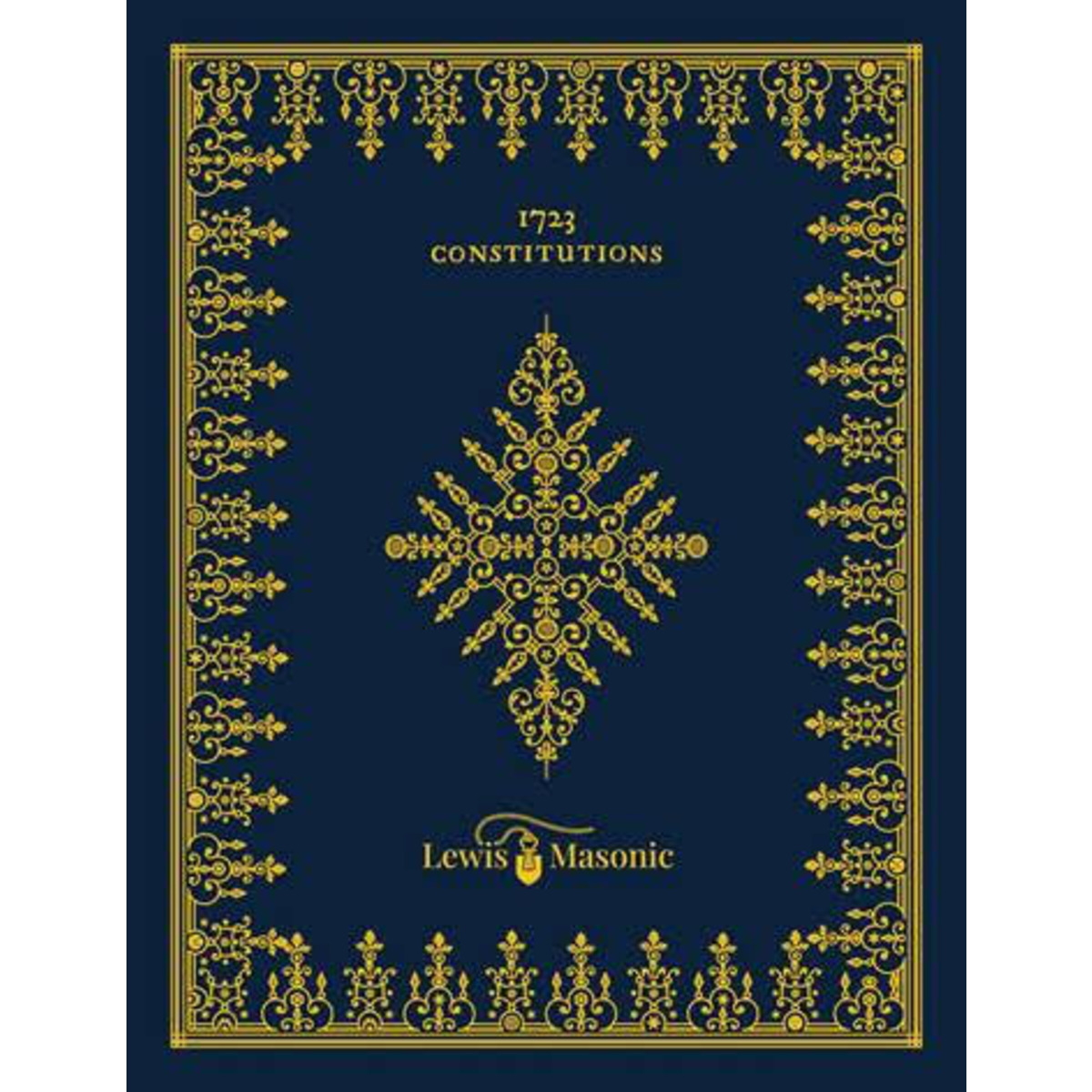
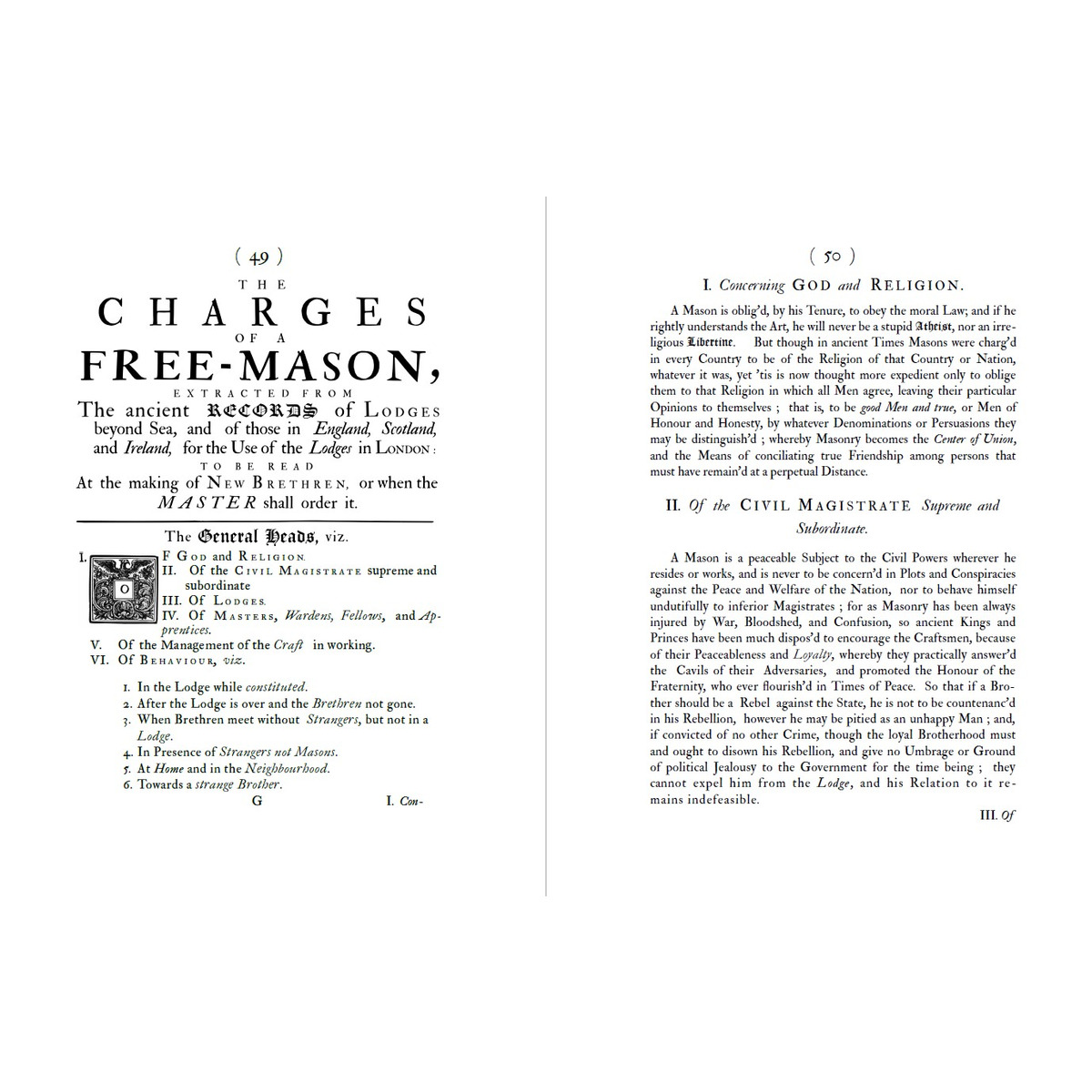
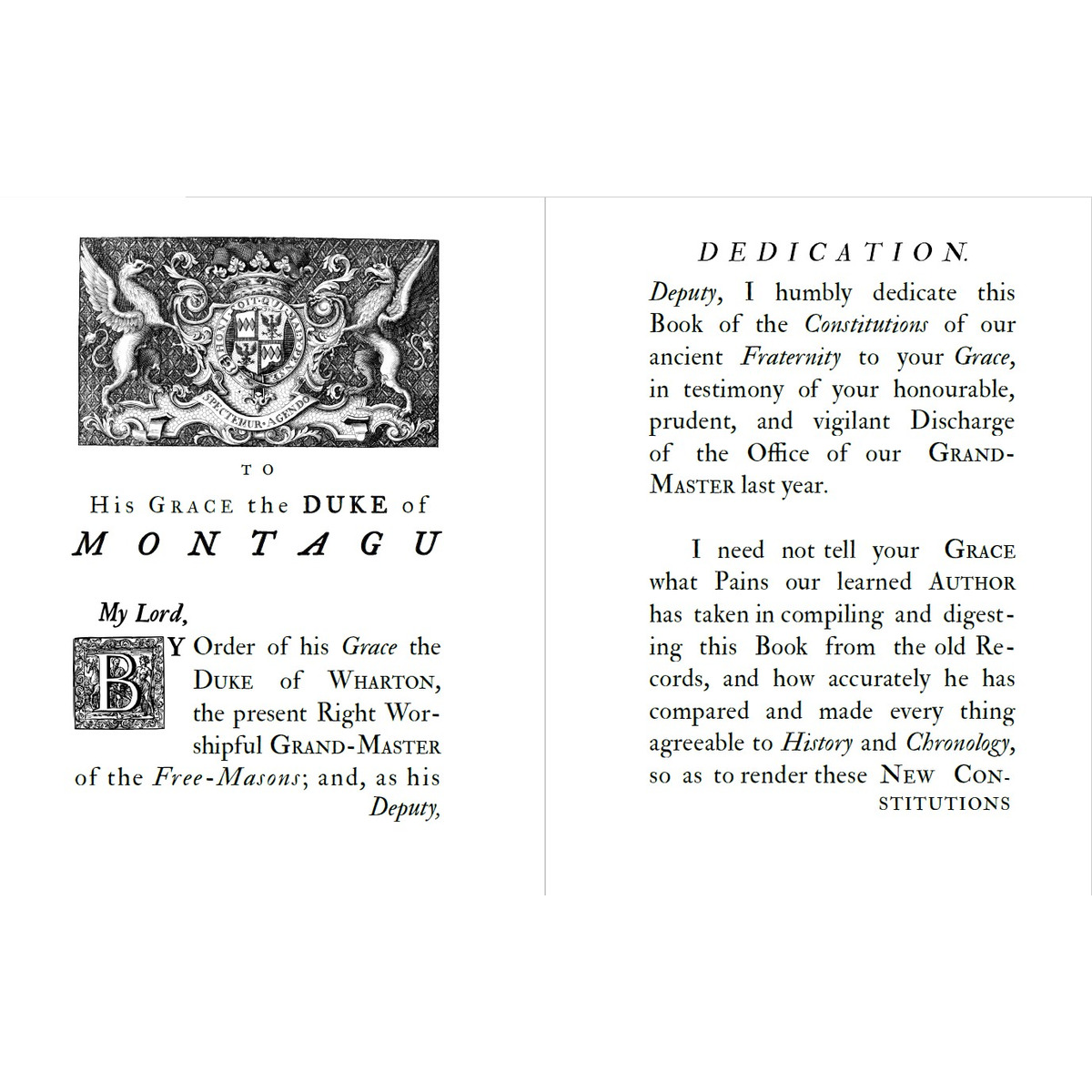
    This book contains a faithful reproduction of the first edition of the Constitutions of the Free-Masons, printed in London in 1723. The text, word spelling and paragraph size has been maintained, original restored decorations have been used, and font and character typesets have been carefully replicated. The cover border and central design have been carefully reproduced from original copies in the archives of the Museum of Freemasonry held at the United Grand Lodge of England.


    Paperback 109 Printed Pages


  • THE AUTHOR
    Lewis Masonic

    When John Hogg started A Lewis in 1864 his aim was to support Freemasonry. He started with philosophical and symbolic works, but soon noticed that he could help the Craft in another way. When visiting lodges he noticed that brethren were using exposés to learn their ritual, which were originally published by non-masons and unsurprisingly were embellishments and errors since they didn't really know what they were doing. As a result of this he started musing on the idea of official ritual books to prevent Masonic ritual being corrupted by those who oppose it. In 1845 Richard Carlile publishedManual of Freemasonry containing all the Craft Degree Rituals, but this was once again an exposé by a non-Freemason. It was used by so many Freemasons to help learn ritual that Hogg finally took action and published the words and tracing boards of the Emulation Rituals under the name Perfect Working for brethren to study. To start with he used the name A Lewis to protect himself from Masonic authorities who had not yet realised the value in what he was doing. After a few years the popularity of his books amongst brethren, as well as the increase in the accuracy and greater understanding of ritual in lodge, convinced the Masonic authorities of the worth in his publications. For over 15 years A Lewis continued to buy, inherit and take on rituals for publication, many of which are still published by Lewis Masonic today.

    Read More
  • CUSTOMER REVIEWS

    Leave a review

    star
    star
    star
    star
    star
    *All submissions will be checked by our administration team before appearing on the site. Please be patient as we will try and approve your comments as quickly as possible.