
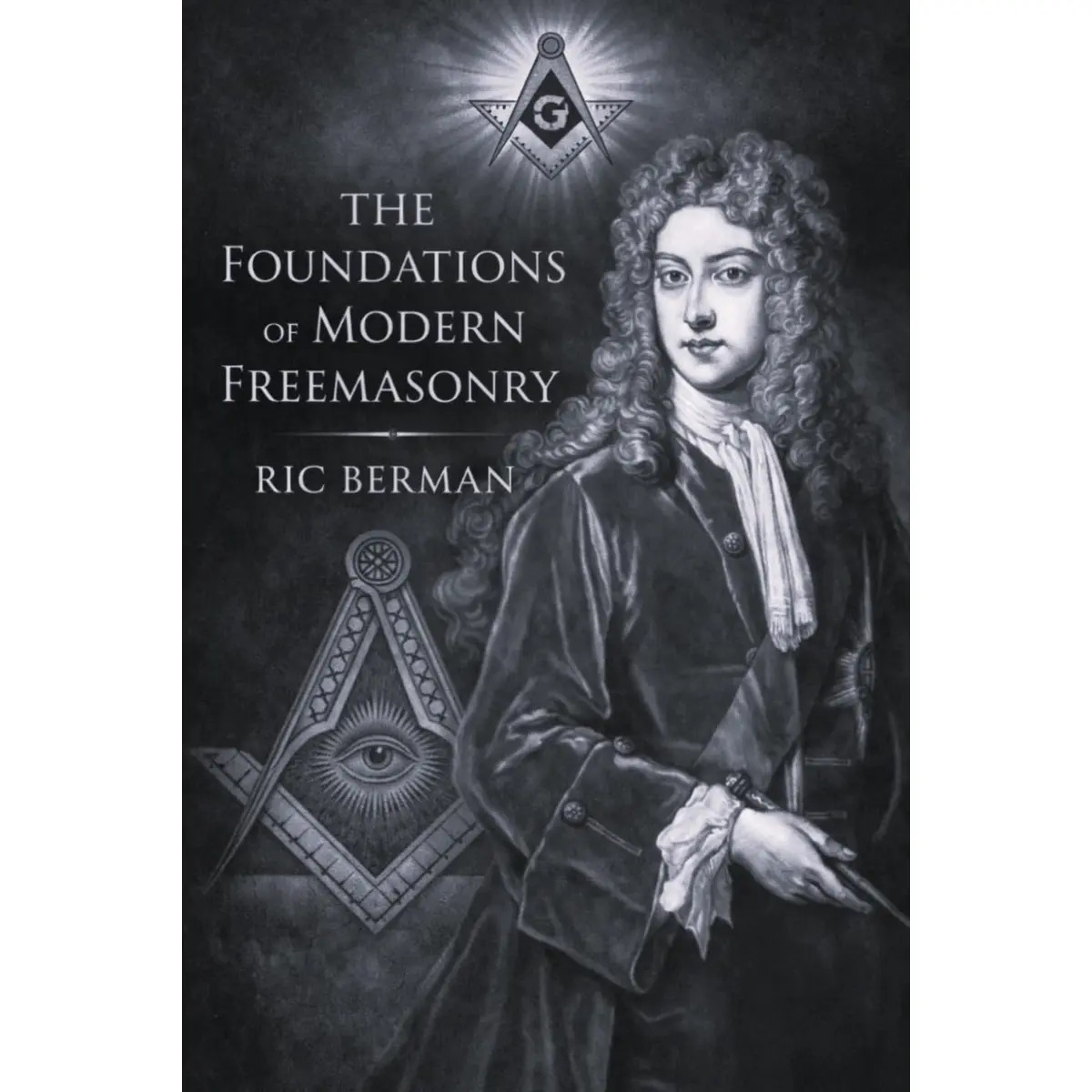
The Foundations of Modern Freemasonry
By Ric Berman
SKU: 9781739170851-
DESCRIPTION
Following the appointment of its first aristocratic Grand Masters in the 1720s and its connections to science and the Enlightenment, 'Free and Accepted' Masonry became part of Britain's national profile and the largest and most influential of its many clubs and societies. The organisation did not evolve naturally from the mediaeval guilds and religious orders but was reconfigured radically by a self-appointed inner core of members of London's most influential lodges. Freemasonry became a vehicle for their philosophical and political views and the 'Craft' attracted an aspirational membership across the middling and gentry.
Through an examination of previously unexplored primary documents, The Foundations of Modern Freemasonry contributes to an understanding of English political and social culture and explores how Freemasonry became a mechanism that promoted the interests of the Hanoverian establishment and connected the metropolitan and provincial elites. Ric Berman explores multiple networks centred on the aristocracy, parliament, the learned and professional societies, and the magistracy, and provides pen portraits of key individuals.
This third, extended edition includes an examination of the origins of Antients Freemasonry and the seminal influence of Laurence Dermott and the London Irish, taking the reader through to 1813, when the Moderns and Antients grand lodges merged to form the United Grand Lodge of England.
Author: Ric Berman
Format: Paperback, 317 pages
Size: 15.6 x 1.83 x 23.39 cm
ISBN: 9781739170851Contents
Preface
Introduction
Chapter One: Freemasonry Before the First Grand Lodge
The Economic Imperative
Freemasonry before the Grand Lodge of England
Randle Holme III and Thomas Tryon
Elias Ashmole
John Aubrey and William Dugdale
Aubrey and the Wren Controversy
Robert Plot
Richard Rawlinson
The Ancient Lodge at York
Late Seventeenth-Century London FreemasonryChapter Two: John Theophilus Desaguliers
Displacement and Poverty
Oxford University, John Keill, and a Newtonian Education
London, Again
An Appliance of Science
Matters Masonic
Through Other Men's EyesChapter Three: Grand Lodge & the Inner Workings
The 1723 Constitutions: Charges and Regulations
The Charges
The Catechisms
The General Regulations
James Anderson and the 1723 Constitutions
1717 or 1721?
George Payne - A Known Unknown
The Westminster and Middlesex Bench
Charles Delafaye, loyalty personified
William Cowper and the 1719 Intake
Nathaniel Blackerby
The June 1721 Intake
The August 1724 Intake
The November 1727 Intake
The Magistrates' Bench and the General Bank of CharityChapter Four: The Professional Nexus
Martin Folkes and the lodge at the Bedford Head
The Bedford Head and the Royal Society
The Royal Society and the Horn Tavern
The Noble Grand Masters & the Royal Society
The Royal Society: Freemasons Proposing Freemasons
William Jones and William Stukeley
Other Learned Societies
The Royal College of Physicians
The Society of Apothecaries
The Society of Antiquaries
The Gentlemen's Society of SpaldingChapter Five: The First Noble Grand Masters
Aristocratic Patronage
A Positive Press Personified
John, 2nd Duke of Montagu
Montagu, Freemasonry and the Military
Politically Convenient
Philip, Duke of Wharton
An Inconvenience Incarnate
Francis, Earl of Dalkeith
Charles Lennox, 2nd Duke of Richmond & Lennox
Successor Grand Masters
The Political DimensionChapter Six: 'Through the paths of heavenly science'
Freemasonry and the Scientific Enlightenment
John Ward
Science and Self-Improvement within the Lodge
Martin Clare and the Old King's Arms lodge
Lectures Elsewhere
Charles Labelye and the Lodge at Madrid
George Gordon and the Lodge at Lisbon
Willem-Jacob s'Gravesande
Parliamentary ImprimaturChapter Seven: Schism & Union
Schism
Laurence Dermott
UnionChapter Eight
Eighteenth-Century Masonic RitualAfterword
Appendix 1
The 1723 Constitutions
The New Charges
The New RegulationsAppendix 2
Grand Lodge of England (Moderns), 1717-1770Appendix 3
Grand Lodge and the Royal Society, 1717-1740Appendix 4 - Selected Military Lodges
Grand Lodge of Ireland
Antients Grand Lodge
Grand Lodge of England (Moderns) & UGLEAbbreviations
The Author
Index
-
THE AUTHOR
-
CUSTOMER REVIEWS